Showing posts with label gardening. Show all posts

Sunday, December 16, 2012

2012: A Year in Gardening

Sunflower photo by Shane Vano

Before my thoughts shift into 2013, I thought I'd reflect on some of the memorable items of this past year's gardening adventures. I tried new things and kept in mind Albert Einstein's famous quote: "The distinction between the past, present, and future is only a stubbornly persistent illusion."

Here are a few highlights from my 2012 gardening season.

The 80 degree March days followed by freezing cold nights destroyed every flower bud on my five pear trees and seven apple trees. Nearly all of Michigan's tree fruit crops were also ruined by climate change.

I bought a tiller. Not a wimpy little tiller, but a big one that actually works. It has an 8 HP engine and cultivates my heavy soil beautifully, backwards or forwards. 

Before I tilled my vegetable garden in May, I asked my dad to move the drip irrigation tubes to one side. When I went back to check on him I discovered, to my horror, that he had ripped up the entire drip system and tossed it in a broken, tangled heap. My dad does not follow directions well. 

I covered one row in my vegetable garden with Agribon cloth. Beneath the "floating row" I grew pest-free lettuce, cabbage and broccoli. Once or twice I applied the organic insecticide Spinosad, a naturally occurring bacterium that kills soft-bodied insects. I have never had such beautiful, pest-free lettuce and cole crops. I planted a second crop of lettuce in August, which I harvested through November. 

I tilled up a small section of field and put in a pumpkin patch, far enough away from the vegetable garden so that the vines could not creep in and strangle everything. (Overturning un-tilled sod always yields an explosion of weeds the first couple of years.) If you're lucky you'll get something benign, maybe clover and golden rod. I got poison ivy, a truckload of it. Thankfully I'm not allergic to urushiol, the plant's volatile oil that brings affliction to many a soul.

In August, a weasel infiltrated the chicken pen and stole some eggs. (Seriously angry birds.) I trapped the weasel inside the hen's roost box. It escaped, because weasels are shape-shifting demon spirits. Then I put out a weasel trap for several weeks. No luck. In October, the weasel returned and this time, four of my hens died from heart failure. Two survived, along with my brave lady duck, although she held a grudge against me until I hired a friend to come out and re-screen the entire pen with 1/4" hardware cloth. I also buried a trench of wire in the soil around the perimeter to prevent weasels from tunneling. The hens are now truly safe. It cost me a small fortune.


Art by Claudia Pimentel http://strangeteethillustration.tumblr.com/

My friend Kevin's old dog Sydney died the same week I lost my hens. We buried her on my property, out by Shed 2, together with the birds. We fondly remember Sydney as "Flower Crusher" for her joy of charging into the large border of Coreopsis blooming along the driveway, and sitting on them. 

My dad and I installed 150' drainage pipe to move standing water away from the backyard (cat-tails were actually sprouting in the lawn). We rented a trencher. After our neighbor and his son helped us pull the trencher out of the mud where I had gotten stuck, the results were uneven, literally. The trench became deeper the closer it got toward the water source. Fortunately we got smart on that project and hired two hunky college dudes to finish the job with long-handled shovels.  

I introduced a couple of friends to the Top-Bar beekeeping method. It was nice to have some bee buddies on hand to bounce things off of. Top-Bar is a small but growing method for hobby apiarists. We need to help each other out. Right now my hive is jammed with honeycomb, workers and a healthy queen. I sure hope they make it through the winter. 

For the first time, my potatoes were invaded by Colorado Potato beetle larvae. I spent a few early evenings picking them off by hand. Problem solved.

Finally, I gave a handful of garden lectures. At one lecture I discussed things a gardener can do in the fall. A woman brought me a three-page list (double-sided), an A-Z of every perennial in her garden. She hoped I'd tell her specifically what to do with each plant. My answer? "Cut it down if you want, or don't cut it down if you don't want." That's the same advice I give everyone who asks this question, because there's no profound secret to cutting back perennials at the end of the year. (I leave most of mine up for insect habitat and to feed the birds.)

Another couple at this same presentation complained to the event coordinator, "All he did was show pictures of his garden."

I apologized for not showing pictures of other people's gardens.

See you next year.


327767_2012 - MANTIS 4-CYCLE DELUXE TILLER PAGE - 300 X 600

Monday, March 26, 2012

The Winter That Wasn't, The Spring That Isn't, and Zombies


Too Soon
      So far this season is a mess.  
      After a ridiculously tepid winter, lacking nearly all the icy shimmer and blustery cold snaps that my romantic heart is fond of, we were met with, ahead of the actual equinox, temperatures in the 80's. My cats were on the floor with their tongues lolling out like high it was noon in Death Valley.
     What a disappointment. Spring should unfold gently, revealing hints and clues to its forthcoming splendor, not hammer us like a bomb. In view of this current disaster, I've officially declared 2012 to be the War on Spring. Bill O'Reilly has not returned my emails, but I suppose he's too busy polishing his forthcoming book on climate science, I Only Believe What I Say (Well, Maybe that Foxy Ann Coulter, Sometimes.)
     Maybe it's my age, but I can't remember ever feeling so doomy-gloomy about the state of the environment, and this is from a guy who predicted in grade school that earth would end in smoldering ruins by our own hands, with everyone screaming, "How did this happen? I put a brick in my toilet tank!"
    Our weather ship now sails into unknown waters, raising numerous, unsettling questions. On March 21st the BBC science news reported on a study published in the journal Nature: "Experts warn that the [warmer temperature] changes will lead to a breakdown in symbiotic relationships with ecosystems, such as plants' dependence on pollinators."
     Crikey, this scares the dandruff off my scalp. "Pollinators" means the whole massive lot, including bees, beetles, flies, wasps, moths, ants and a slew of vertebrates such as bats and hummingbirds. It's bad enough that these organisms have already been in decline since the mid 20th century, thanks to a host of injurious assaults ranging from habitat loss to pesticide use. 
     Soil temperatures here are already in the 60's. My roses, which normally begin pushing tender buds in very late April, are flushed with bright green leaves. The elms in the woods are far ahead of schedule, bursting with bronze foliage. My early variety daffodils are already kaput. I've mowed the field, twice.  
     I once read how important it is for us to slowly transition ourselves through the season changes because it's healthy for our circadian rhythms--wearing shorts on the first warmish day of March gets the brain in a tizzy. Sure, when the first warmish day of March is 60 degrees, it's exhilarating. Even people who don't golf rush out to buy a set of clubs. But when I'm sweating buckets and cursing the heat before I've sowed my first crop of salad greens, it's ominous. I half expect the dead to crawl from their graveyards.  
     March is the now the new May, and if our future gardens become too hot for peas to germinate, at least we'll have an endless supply of zombies to hand pollinate our banana crops and pick our coffee beans.  
     Until the apocalypse arrives, here are a handful of pretty, and untimely, things from my garden.

Golden Throated Species Tulip

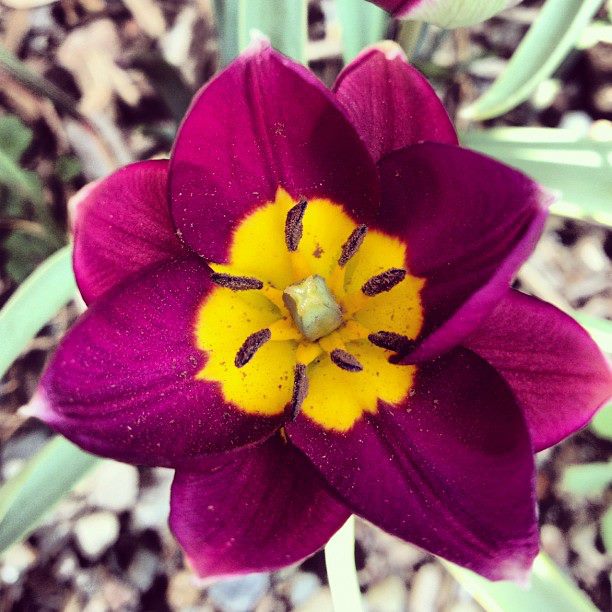
Deep Purple Species Tulip
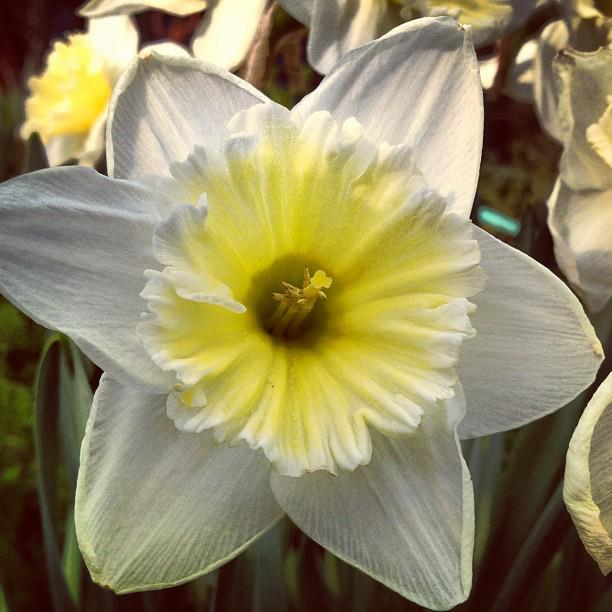
Pale Daffodil, Looking Up


Pinky Pink-Pink Hyacinth

Narcissus, Unashamed
Flamin' Species Tulip


They Look Like Lotus!
Hella B.
A Circle of Dainty Dancers

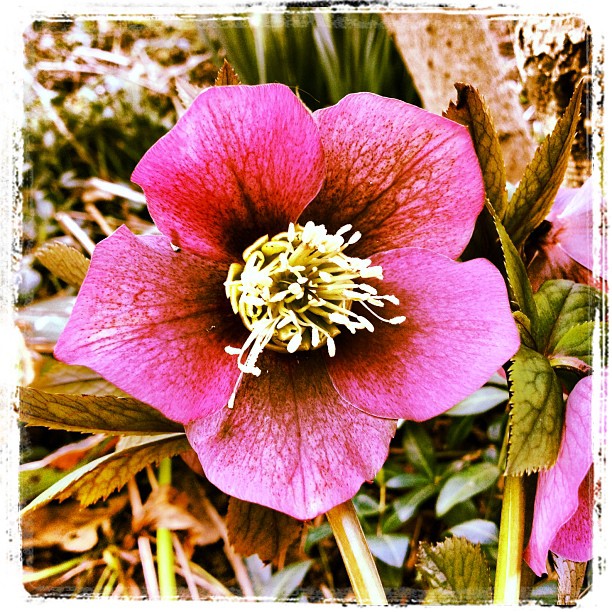
Hortense Hellebore


Red Flash Species Tulip

For. SIGH. Thee. Uh.


Spare. Gus. Tips.
Ari Muscari

MOLES ARE COOL!  GET OVER IT!


Shane VanOosterhout is The Passionate Gardener.  
For more garden inspiration, you can follow him on Facebook


powered by TinyLetter

21765_FREE Standard Shipping on Orders $49 or more at RedEnvelope312718_10% of $100 Order+ at Jackson & Perkins


Monday, November 7, 2011

Gardeners, Travelers, Friends

       "Gardening is a long road, with many detours and way stations, and here we all are at one point or another. It's not a question of superior or inferior taste, merely a question of which detour we are on at the moment. Getting there (as they say) is not important -- the wandering about in the wilderness or in the olive groves or in the bayous is the whole point."  Henry Mitchell
 
     Five years ago I met a tiny woman with bobbed, ivory hair named Alice Wilkes.  She struck me as once-famous 1920's flapper girl who had traded table top dancing for gardening because at the age of eighty-three it made good sense to keep nearer to the ground. 
      Alice showed up at my workplace brimming with questions. Apparently her raspberries had gone bad over the years as raspberries always do and she was looking for a better variety.  I recommended some reliable mail order companies that sell virus-free bramble stock.
     Alice and I hit it off quite well. The ladies at my office remarked that I had made a new friend and sure enough, she called me two weeks later. "I do wish you'd come for a visit and see my garden," she said.  
     When I arrived Alice seemed reluctant to invite me in through the front door, ordering me to meet her outside at the rear of the house.  On the way I passed a detached old garage filled with everything but an automobile -- shovels, trowels, hoes, rakes, forks, towers of clay pots, bags of manure and fertilizer.  It was so crammed with garden apparel that there was scarcely enough room to stand, but looking at Alice's diminutive body I believed she could crawl unscathed through loops of barbed wire to find a good spade if she needed one.
     Her garden wandered along a narrow strip of side-yard, each off-kilter bed growing into the next as if the plants had burst through uneven walls and she had set forth, ant-like, to contain the green spill within a new border of smooth beach stones.  
     "It's really just a lot of plants I like."  Alice said it so plainly that any scoundrel would take her at face value, but I knew better.  She was a true connoisseur.
     She pointed out her recent acquisitions and we both agreed that creeping miniature sedum 'Angelina' was a stand-out, although she remorsefully added that hers was subject to a bit too much afternoon shade and was therefore spindly.  
     The real jewel, however, was soon revealed:  a common Mediterranean fig (Ficus carica) that had wondrously survived three consecutive Michigan winters.
     "Any fruit?"  I asked, greatly impressed.
     Alice shook her head.  "The dog-gone things never get big enough to ripen before the snow hits.  Maybe this year I'll hit the jackpot."
     For a while we simply sat on the cool earth, noting our shared affection for rampant clover in turfgrass, praising the weather and hinting at politics (we agreed).  I learned that her husband had recently died and that her son had been killed in the Vietnam war but she said it all with a slight shrug, not indifferently but without complaint.
      Before we parted, Alice shared some of her Cranesbill and loaned me her paperback edition of Henry Mitchell's book One Man's Garden.  "He's marvelous," she promised, adding, "If you don't care for him I just might not be able to be your friend."
     Oh, Alice, I thought, I love it when you talk like that.
     The next time we met, just before August's conclusion, I gave her a dense clump of Helianthus maximiliani, which I instantly regretted. Where on earth would she put this rocketing prairie giant in her small suburban garden?  I warned her that if she showed it too much affection she might be sorry.
     I spent the cold months reading One Man's Garden, relieved that Alice and I would remain friends after all.  That was five years ago, a blink of an eye.  We visited only once this summer, regretfully too near the end of things, but her late-season raspberries were refusing to quit and we stood on the driveway, happily eating them together.
     Alice said nothing that humid afternoon of the plastic tube tucked beneath her nose, nor did I ask. I gave her a new copy of Doug Tallamy's revelatory book Bringing Nature Home, promising her she'd adore it as much as I do.  We observed the gently swaying curly locks of her Corkscrew Willow and then she said it was time for her to go to dinner with her daughter -- they were having burritos.  Glancing at her, tinier than ever, I wondered where all those beans could possibly fit.
     Alice phoned my office the next week but missed me.  She had a question about figs -- would they ripen indoors if they were still green?  I returned the call but received her answering machine.  "I'll be here on Wednesday," I said, "I look forward to talking with you then."
     I did not hear from Alice again.  A co-worker broke the news as she handed me Alice's obituary.  I placed it on my desk next to the yellow notepad where I had written a reminder.  My handwriting seemed urgent.  "Call Alice," it said.  
     When I thought of Alice's garden without Alice there to tend it, it was too awful to consider.  The best I could do to ease my sadness was to revisit the words of Henry Mitchell, a man who wisely understood that in our deepest hearts, gardeners become the luckiest of traveling companions when we cherish our journey together, even if we only cross paths every once in a while.


Introducing Country Living and Ty Pennington Themed Christmas Decor     


10% of $100 Order+ at Jackson & Perkins

Tuesday, October 11, 2011

Heckled


     I was recently heckled at a ladies' gardening club. 
   "What about the weeds?" An old woman narrowed her eyes in contempt, as if I had spoken unholy words.
    "I'm sorry?" I asked.
     "What about the weeds I said!"
     "What would you like to know about them?"
     "You used the word "natural."  A natural garden will just fill up with weeds."
     I rewound my thoughts.  "Yes, good point, a weed management program is necessary to maintain any sort of garden.  I am speaking today on garden design that is not formal.  "Natural" does not mean you allow the weeds to take over."
     She said no more but her expression did not convey satisfaction.  Perhaps she was just displeased with the lunch options.
     I concluded my lecture without further complaints, although another woman left early (not before noisily bundling some brownish cookies into a paper napkin) and there was a couple in the back row who chatted furiously throughout, their heads bobbing like a pair of tweedling sparrows.
     Public speaking is not without entanglements.  Many people I know are terrified of facing a group and opening their mouth at the same time, insisting that they'd rather take a sharp stick in the eye, but giving a horticulture presentation is one of my favorite things to do.  The process combines some of my best creative skills:  writing, photography, verbalizing ideas, and sarcasm.  
     Crafting an engaging garden lecture is no different from telling a good story, as long as the story is told by someone who is recommending horse shit, not selling it.  
     Over time, gardeners naturally become good skeptics.  They've heard a zillion claims and tried as many gimmicks.  Say "Meadow in a Can" to a room full of knowing gardeners and you are guaranteed to get a laugh. 
     I once attended a garden convention where a man was marketing a "microbial caffeinated soil enhancer." 
     "Why caffeine?" I asked.
     "Because it wakes up the beneficial bacteria and gets them off to a fast start."
     There was some horseshit I wasn't buying.


10% of $100 Order+ at Jackson & Perkins 18407_Cabela's: $20 off orders of $150 or more through 11/15

Unlock Your Patio and Garden Potential at LNT.com! Shop Now and Save!

10% off $100 Order at Park Seed

Thursday, July 9, 2009

The Lessons of Raspberries, Japanese Beetles & Winston Churchill.


Early this spring I tore out all of the raspberry canes at the roots and promptly burned them, following the recommended guidelines for old brambles (seven years). It was not too painful a chore. Raspberry plants are not at their best in clay soil, and despite my best efforts - proper pruning and fertilization - they have been only a moderate success in my garden.

What my raspberry plants did provide me with more reliably than fruit were Japanese beetles, the miniature WMDs of the insect world, gifted to us from Japan in 1916 via a shipment of iris bulbs received by way of port in Riverton, New Jersey.

Until I planted those blasted raspberries I could readily boast of having Japanese beetle-free gardens. Perhaps it was only a coincidence, but either way, two years after the raspberries were planted, the Japanese beetles located me by way of their internal GPS. At first the ravenous barbarians seemed to prefer the raspberries to anything else in the garden. Fine! I convinced myself they could have the damn things. "Devour them all!" I cried.

But this was only an early stage of denial: bargaining with the insect gods to sacrifice my middling raspberries for the sake of everything else they love to eat. Then, as they swarmed and mated and buzzed and oozed their slatternly perfume to the wind like degenerate gluttons at Caligula's penultimate orgy, hatred seeped into my arteries.


I was cornered, indentured to confession: I have Japanese beetles. Oh, how these four words chilled my marrow. I vowed to fight, to be brave, to not let them beat me at my game. Every evening after work I stalked the little demons with reprisal, plunging hundreds of wriggling beetles into a bucket of soapy water where, like hoards of flying Rasputins, they clung to life with shocking tenacity. To witness this phenomenon, I immediately discovered, is as equally horrific as it is beautiful.

The war declared, I began to doubt my natural approach to I.P.M. Each time I entered a hardware store I found myself drifting, trance-like, toward the shelves of brightly colored pesticide containers, every label a declaration of annihilation of loathsome garden pests.

Then one day I purchased a bottle of Sevin (carbaryl).

I applied the Sevin to my raspberries. The Japanese beetles seemed mildly irritated but only a handful died. Some flew away before I sprayed them. Many departed unscathed even after I sprayed them.

The day following the first application, the beetles returned to dine, yesterday now forgotten.


As I approached the raspberry patch I stopped to listen to the hum of pollinators collecting nectar up and down the flowering canes. My eyes followed a spider as it danced across a billowing web like an eight-legged ballerina, her private stage hidden within a jungle of glowing green leaves and flickering shadows. Brown ants, fearless, busily streamed atop the shaded leaf litter as they carried the food that would sustain their colony.

When I thought of the lethal rain of insecticide falling down upon all this life, all this important activity, silencing it for the sake of a few raspberries, I reminded myself why I garden in the first place: to woo nature closer and learn from what I see.

In battle a man is tested.

Winston Churchill once said, "Never, never, never believe any war will be smooth and easy, or that anyone who embarks on the strange voyage can measure the tides and hurricanes he will encounter. The statesmen who yields to war fever must realize that once the signal is given, he is no longer the master of policy but the slave of unforseeable and uncontrollable events."

I did not ever again apply Sevin to my raspberries but instead returned to hand murdering each Japanese beetle, hurling them into a sudsy bucket. The rows neatly gleaned, I dug a hole and buried the dead.

Shane VanOosterhout is The Passionate Gardener.  
For more garden inspiration, you can follow him on Facebook


Saturday, April 26, 2008

Green Thumbs Don't Grow on Trees

People often tell me they aren't good gardeners, as if possessing a green thumb is a genetic trait, bestowed only to a lucky few. To this I reply, "If any of us were born with green thumbs we'd no doubt be spending a fortune on trying to correct the problem."

The metaphor of the green thumb is best suited to describe a hard-earned honor, a skill gained from routine practice, from many years of experience.

If there is a "secret" to becoming a good gardener, to
turning one's thumb green as it were, it is not an inborn trait; it is passion, and everyone has passion.

The surprising thing about becoming a gardener is
discovering your passion; rousing ancient senses within your mind and body that will lead you on a lifelong journey. Little did you know that new seedlings just up from the warm soil have their own unique odor, just as the sweet smell of babies can only be found on babies.

When hands touch a leaf or stem or petal one's nerves tingle. The brain, I am convinced, was long-ago wired to communicate intuitively with the botanical. This is not a magical phenomenon, it is evolutionary, for without a trait for the desire to care for plants the human race would undoubtedly perish; our earliest ancestors secured a place for
homo sapien through the very act of gardening, through forming emotional connections with plants.